










The short answer
- Wisdom teeth are your third molars at the very back of the mouth. They usually come in between ages 17 and 211.
- Signs of a problem include pain or stiffness in the jaw, a swollen and infected gum flap over a partly erupted tooth, food getting trapped, and decay or gum disease that is hard to clean around1,4.
- Not every wisdom tooth needs to come out. If a tooth isn’t causing problems, the NHS says it is usually left in place and watched at check-ups4.
- Removal is usually done in the dental office with a local anaesthetic, and your dentist may refer you to an oral surgeon for harder cases2,3.
- Get emergency care for swelling that makes it hard to breathe, swallow or open your mouth, or that affects your eye6.
What wisdom teeth are and when they come in
Wisdom teeth are the upper and lower third molars, the last teeth at the back of each side of your jaw1. HealthLink BC says they usually arrive between ages 17 and 21, and the Ontario Dental Association gives a wider window of roughly 15 to 251,3.
Some mild discomfort while a wisdom tooth breaks through the gum is normal. Significant pain is a reason to see a dentist soon5. A wisdom tooth that grows in straight, with enough room, usually causes no trouble at all1.
What an impacted wisdom tooth means
A tooth is called impacted when it is trapped in the jawbone or under the gum, usually because the jaw has no room for it or the tooth is growing at the wrong angle5. Some only partly break through, leaving a flap of gum over the top where food and bacteria collect1.
Impacted teeth can sit quietly for years, or they can cause pain, infection and damage to the tooth next door3. Less often, a fluid-filled sac called a cyst forms around an impacted tooth and can harm the nearby bone and roots1,5.
Wisdom teeth symptoms that suggest a problem
Most wisdom tooth problems show up between ages 15 and 25, and people over 30 rarely need them out because of new problems1. These are the signs sources list:
- Pain or jaw stiffness near the back of the mouth1.
- Red, swollen, sore gum over a partly erupted tooth. The NHS calls this gum infection pericoronitis4.
- A tooth growing at an angle that rubs your cheek or tongue1.
- Food getting stuck around the tooth, leading to decay or gum disease on the wisdom tooth or the molar in front of it4,5.
- Swelling around the tooth, or a dental abscess (a build-up of pus)4.
Do all wisdom teeth need to be removed?
No, and the major sources don’t fully agree on when to act. The NHS says a wisdom tooth that isn’t causing problems is usually left alone and checked at routine visits4. HealthLink BC notes that some experts favour removal before age 20, while others prefer to wait for problems, and that studies have not clearly shown which approach is better for teeth with no symptoms1.
The Ontario Dental Association says the decision depends on whether the teeth are causing problems or are likely to, based on gum health, space, the direction the tooth is growing and the risk of cavities3. It adds that removal is often suggested in young adulthood, because the risks of surgery and recovery tend to rise with age3.
Crowding is a common worry. HealthLink BC lists crowding of other teeth among possible problems, while the ADA describes the idea that wisdom teeth damage nearby teeth as something some people believe1,5. Your dentist can tell you what your X-ray actually shows. If you keep your wisdom teeth, keep having them checked and floss around them, since the risk of problems grows with age5.
How wisdom tooth removal works
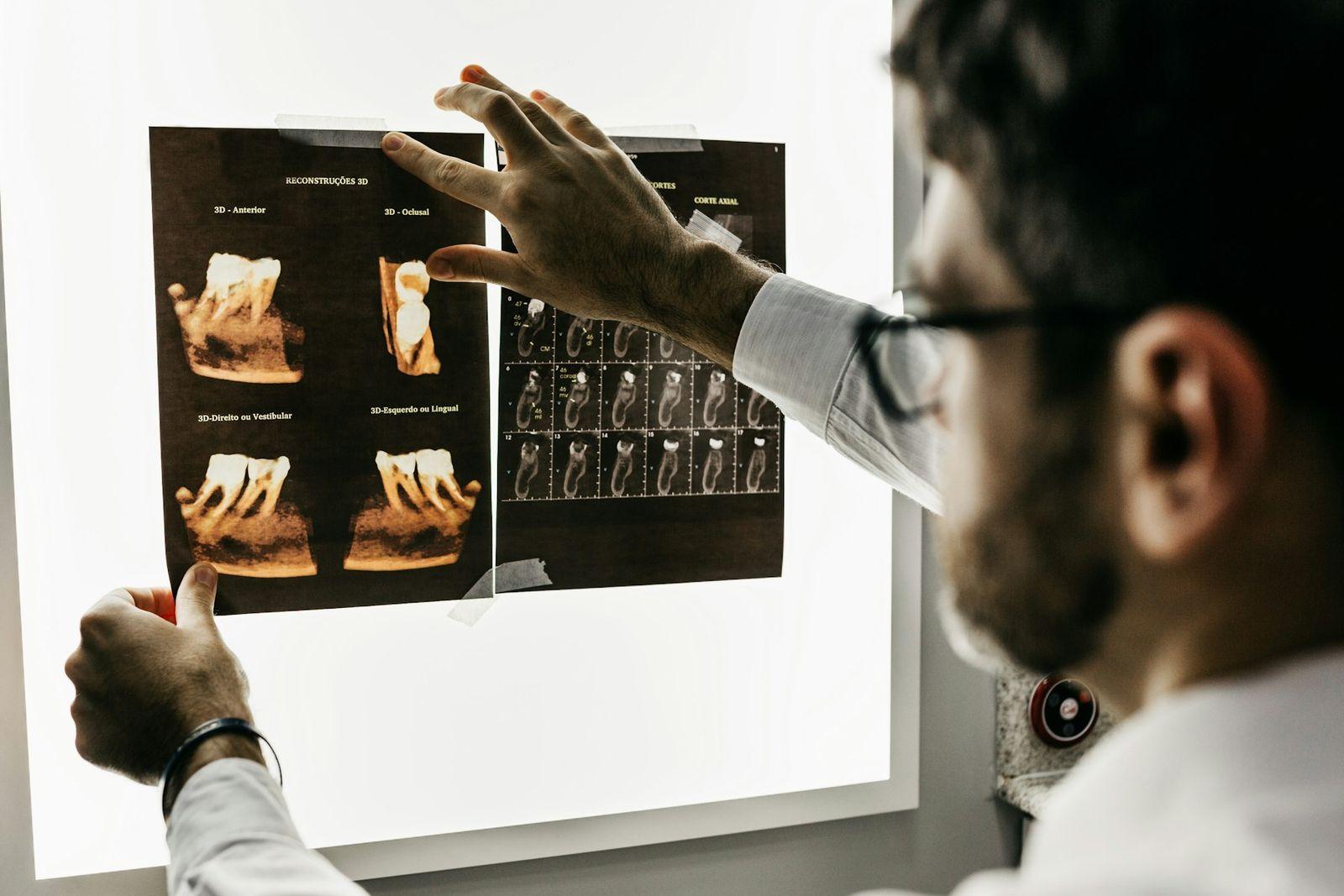
It starts with an exam and X-rays, often a panoramic X-ray that shows the whole jaw3. If there is an active infection, removal may wait until it settles, and you may be prescribed antibiotics first1.
For the extraction, local anaesthetic numbs the area4. The dentist may open the gum, remove some bone that covers the tooth, and take the tooth out whole or in a few pieces, then place stitches if needed2,4. The NHS says the removal itself usually takes a few minutes and no more than about 40 minutes4.
Some people also have sedation, or a general anaesthetic for difficult teeth or strong anxiety4. For complex cases, your dentist may refer you to an oral and maxillofacial surgeon, who commonly uses IV sedation3. At Élevé Dental in Brampton, Dr. Harkhush Dua, a General Dentist, can assess your wisdom teeth, and the sedation we offer is nitrous oxide (laughing gas); if you need deeper sedation, we may refer you to an oral surgeon.
Wisdom teeth removal recovery
Most people go home the same day4. Pain, swelling, a stiff jaw and some bruising can last up to two weeks, and they usually start to improve after a day or two4. Plan on soft foods and avoid straws for the first few days, since sucking can disturb the blood clot2.
Possible complications include dry socket (when the clot is lost too early), infection, and numbness or tingling of the lip, chin or tongue from nerve irritation, which usually improves over weeks or months2,4. Our tooth extraction aftercare guide covers the day-by-day details.
Have a question about your own teeth? Dr. Dua can take a look.
Questions people also ask
How do I know if my wisdom teeth are coming in?
You may feel pressure or mild soreness at the very back of your jaw, or see the tip of a tooth through the gum. Mild discomfort is normal while a wisdom tooth erupts, but significant pain is worth a dental visit5.
What helps wisdom tooth pain while I wait to see a dentist?
HealthLink BC suggests a cold pack on the cheek for 15 to 20 minutes at a time, warm salt-water rinses every few hours, and an over-the-counter pain reliever such as ibuprofen taken as the label directs1. Don’t put aspirin on the gum, and don’t give aspirin to anyone under 181.
What age should wisdom teeth be removed?
There is no single right age. Dentists usually start checking wisdom teeth in the mid to late teens, and removal is often advised in young adulthood when it is needed, because risks tend to rise with age3. If your teeth aren’t causing problems, your dentist may simply monitor them4.
How long does wisdom teeth removal recovery take?
Many people return to normal activities the next day, though a difficult removal or general anaesthetic may mean one to three days off work4. Soreness and swelling can last up to two weeks4.
Can I drive after wisdom teeth removal?
The NHS advises not driving for 24 hours after a sedative injection or 48 hours after a general anaesthetic4. Ask your dentist what applies to the sedation you had.
Sources
Every numbered note in this article points to one of these public sources.
- 1.HealthLink BC. Wisdom Tooth Problems
- 2.HealthLink BC. Wisdom Tooth Extraction
- 3.Ontario Dental Association. Wisdom Teeth Removal
- 4.NHS. Wisdom tooth removal
- 5.American Dental Association (MouthHealthy). Wisdom Teeth
- 6.NHS. Dental abscess
- 7.Government of Ontario. Your health
This article is general information, not a diagnosis or a treatment plan. Every mouth is different. For advice about your own teeth, talk to a dentist. In an emergency, call 911 or go to the nearest hospital.