




The short answer
- Book the first visit within 6 months of the first tooth coming in, or by 12 months of age1,2.
- You usually hold your baby on your lap while the dentist checks the teeth, gums and jaw and talks with you about home care7,6.
- Start brushing at the first tooth. For children under 3, ask a dental professional whether to use fluoride toothpaste; if so, use an amount the size of a grain of rice. From age 3, use a small green pea3,4.
- Don’t put your baby to bed with a bottle of milk or juice3.
- Healthy Smiles Ontario and the Canadian Dental Care Plan may cover children’s dental care for eligible families9,10.
When your child should first see a dentist
The Canadian Dental Association (CDA) recommends that a dentist assess infants within 6 months of the first tooth coming in, or by one year of age1. The Canadian Paediatric Society gives the same timing: within 6 months of the first tooth and no later than 12 months3.
The idea is to see the dentist before problems start. The CDA’s position statement says early childhood tooth decay is still a significant problem, that severe cases can end in hospital treatment, and that risk factors such as feeding patterns and fluoride use can be identified by age one2.
You can take your child to a general dentist or a paediatric dentist. The CDA suggests calling the office to ask what age they like to first see children1.
What happens at the first visit
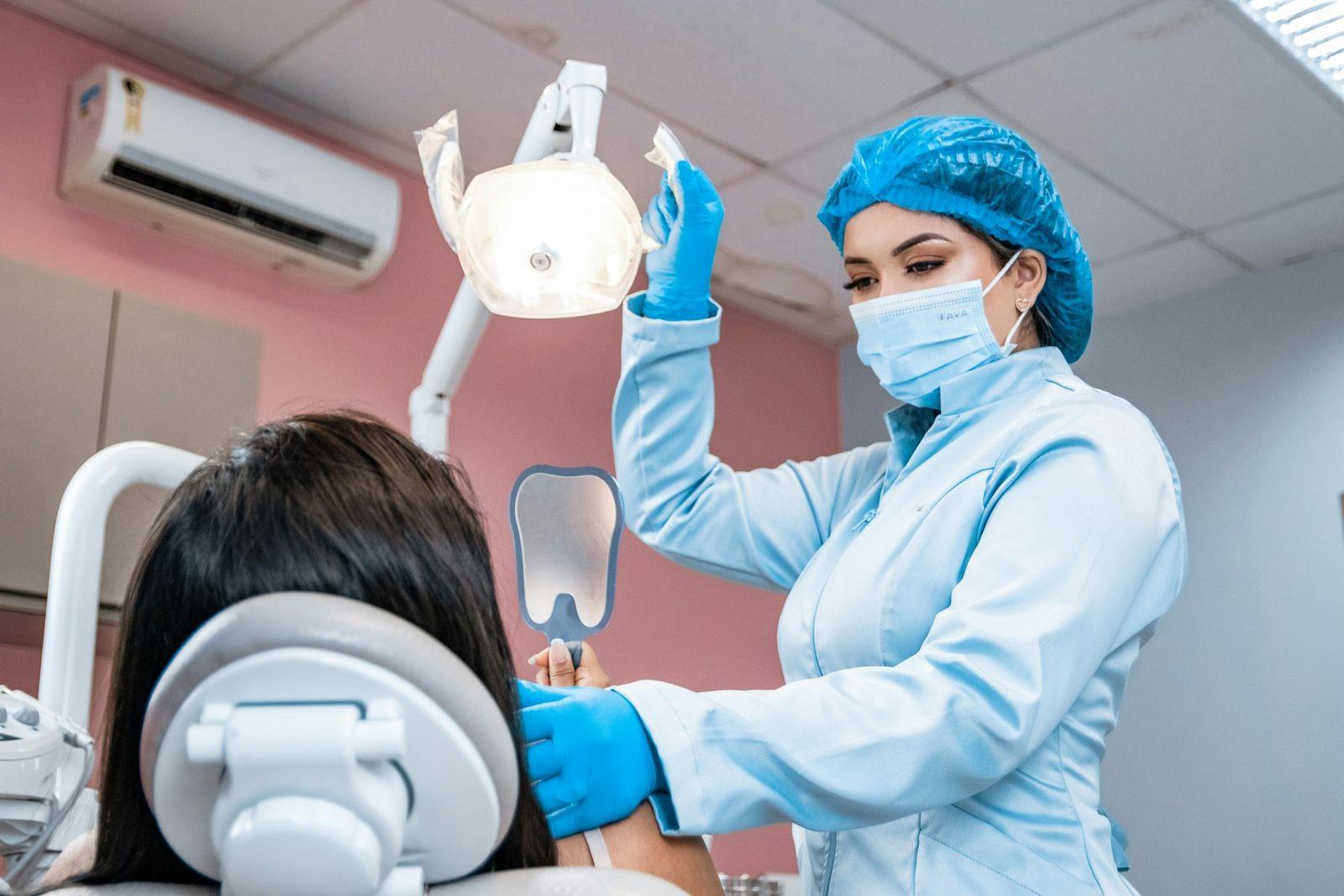
A baby’s first dental visit is mostly a quick look and a conversation. The American Dental Association’s MouthHealthy site says you will likely sit in the dental chair with your child on your lap7. The dentist checks that the teeth, jaw, bite and gums are developing properly and looks for injuries and cavities, and may clean the teeth depending on age7.
The dentist will also review your child’s medical history and their risk of decay2. Expect to talk about brushing, fluoride, eating habits, teething, and soother or thumb use6,7. Based on what they find, the dentist will suggest how often your child should come back2. In most cases the CDA says an exam every six months lets the dentist catch small problems early1.
Crying or wiggling is normal at a first visit7.
How to prepare your child
A few small steps can make the appointment easier for both of you.
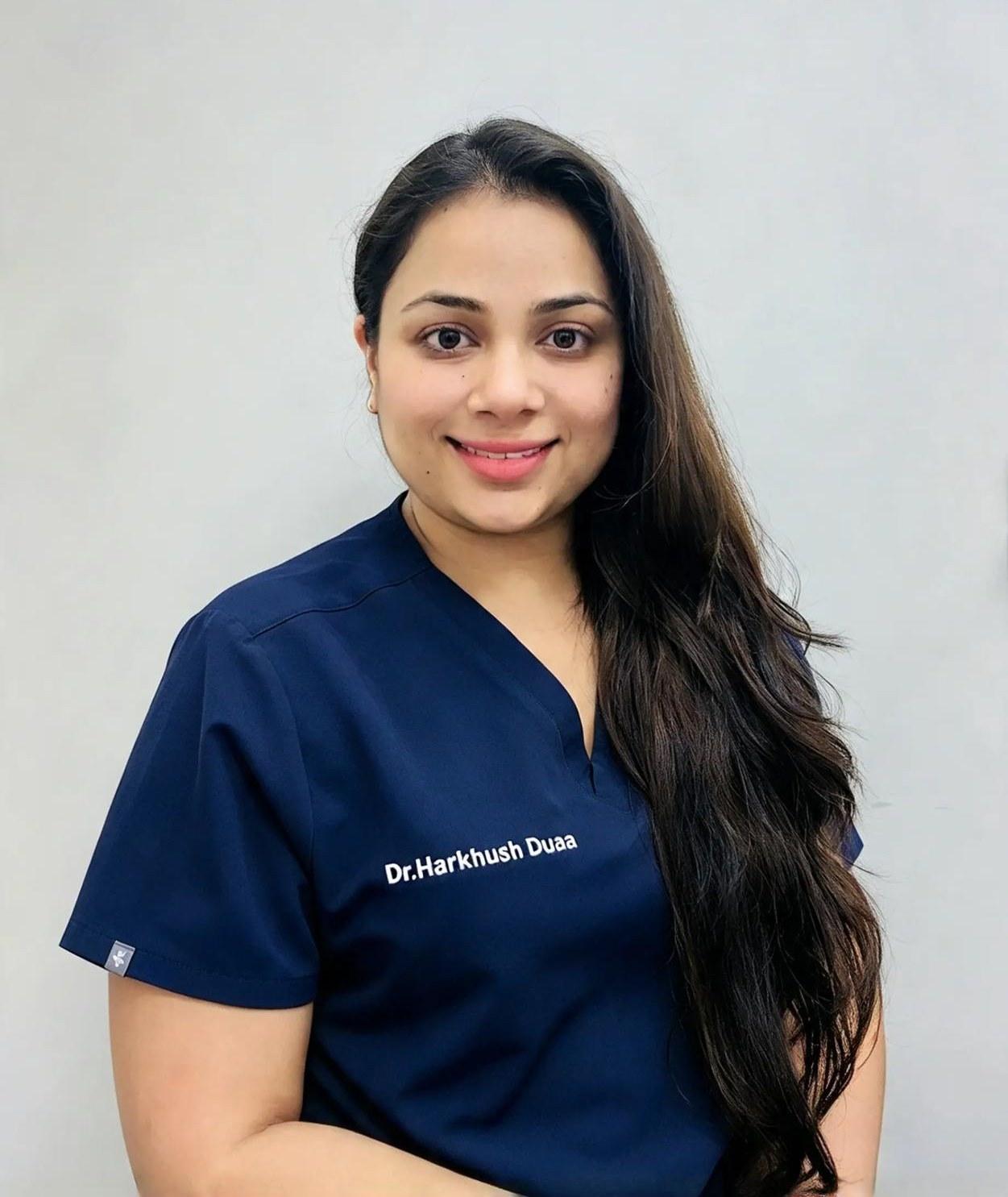
At Élevé Dental in Brampton, Dr. Harkhush Dua, a General Dentist, sees young children and can answer questions about teething, brushing and fluoride at that first visit.
- Book a time when your child is usually rested and alert, not at naptime7.
- Practise opening the mouth at home, and save snacks for after the visit7.
- Ask for health history forms ahead of time and bring a list of your questions7.
- Describe the visit in a matter-of-fact way and skip lines like "it won’t hurt". If you are nervous at the dentist yourself, another family member can bring your child1.
Brushing and how much toothpaste to use
Mouth care starts before the first tooth. Wipe your baby’s gums with a soft, damp cloth, then switch to a soft baby toothbrush once the first tooth appears1,3. The Canadian Paediatric Society suggests cleaning teeth at least once a day, usually at bedtime3.
Toothpaste guidance in Canada depends on your child’s age and risk of decay. Health Canada says that for children under 3, you should first check with a health professional about whether your child is at risk of tooth decay4. Your dentist or hygienist can make that call at the first visit.
Very young children may not be able to spit yet, so they swallow some toothpaste, which is why the amounts are so small. Health Canada says an adult should always help children under 6 brush4.
- Under 3: an adult brushes. If your dental professional recommends fluoride toothpaste, use an amount the size of a grain of rice3,4.
- Age 3 to 6: no more than a small green pea of fluoride toothpaste (about 5 mm), with an adult helping4.
- Teach your child to spit the toothpaste out rather than swallow it3.
- Lift your child’s upper lip once a month and look for chalky white or brown spots near the gumline. See a dental professional if you find any3.
Bottles, juice and early childhood tooth decay
Early childhood tooth decay means cavities in children from about 6 months to 6 years of age6. HealthLinkBC links it to constant use of a bottle or sippy cup filled with milk, juice or formula, especially at bedtime6.
- Don’t leave your baby in bed with a bottle. At naptime, offer water instead of milk or juice3.
- Introduce a sippy cup after 6 months and move to a regular cup between 12 and 15 months3.
- Juice isn’t needed. If you offer it, keep it under 125 mL (4 oz) a day, in a cup, with a meal or snack3.
- Never sweeten a soother, and don’t put a soother or spoon in your own mouth before giving it to your baby3,6.
Fluoride varnish
Fluoride varnish is a protective coating painted onto the teeth by a trained dental professional or oral health aide3,4. Health Canada says it helps prevent decay in people at risk4. The CDC suggests asking your dentist or doctor about fluoride varnish as soon as the first tooth appears8.
Fluoride drops or tablets should only be used if an oral health professional advises them4.
Teething basics
The first tooth usually comes in around six months, though anywhere from three to 12 months can be normal5. Common signs are red or swollen gums, drooling, chewing on hard objects and crankiness5.
Teething does not cause fever or diarrhea. AboutKidsHealth says to contact your doctor if your baby has either, and the Canadian Paediatric Society says to call a doctor for any fever in a baby under 6 months5,3.
- Rub the gums with a clean finger or a damp washcloth5.
- Offer a firm rubber teething ring or a chilled (not frozen) washcloth5.
- Avoid numbing gels unless your doctor recommends one, liquid-filled teething rings, and teething biscuits5,3.
- AboutKidsHealth says acetaminophen or ibuprofen may help a very cranky baby. Follow the package directions or ask a pharmacist5.
Dental coverage for children in Ontario and Peel
Healthy Smiles Ontario is a provincial program for children 17 and under who live in Ontario and whose household income is at or below a set limit9. It covers check-ups, cleaning, fillings, X-rays, scaling, extractions and urgent care, but not braces or whitening9. Some children are enrolled automatically, for example if the family receives Ontario Works or Ontario Disability Support. Children who already have dental insurance may still be eligible. Check ontario.ca for the current income limits and how to apply9.
The federal Canadian Dental Care Plan (CDCP) is another option for families with no access to dental insurance whose adjusted family net income is under the federal limit and who filed taxes for the previous year10. Dependants are included in the application11. Check canada.ca for the current rules, and see our CDCP guide.
In Brampton and the rest of Peel, Peel Public Health offers free dental screening for children in select grades at publicly funded elementary schools. A registered dental hygienist does a quick check, and a results form goes home with each child12. The screening does not replace a regular dental visit12. Call Peel Region at 905-799-7700 for details12.
Have a question about your own teeth? Dr. Dua can take a look.
Questions people also ask
What age should a baby first go to the dentist?
The CDA recommends a dental assessment within 6 months of the first tooth coming in, or by one year of age1.
Should I use fluoride toothpaste for my toddler?
For children under 3, Health Canada suggests checking with a health professional about your child’s risk of decay first. If fluoride toothpaste is recommended, an adult should brush with a grain-of-rice amount4. From 3 to 6, use a small green pea4.
What if my child cries during the visit?
That is normal for a first dental visit. You will usually hold your child on your lap, and the dental team can help settle them7.
Does teething cause a fever?
No. AboutKidsHealth says teething does not cause fever or diarrhea, so call your doctor if your baby has either5.
Sources
Every numbered note in this article points to one of these public sources.
- 1.Canadian Dental Association. Your Child’s First Visit
- 2.Canadian Dental Association. CDA Position on First Visit to the Dentist
- 3.Canadian Paediatric Society (Caring for Kids). Healthy teeth for children
- 4.Health Canada. Fluoride and oral health
- 5.AboutKidsHealth (The Hospital for Sick Children). Teething
- 6.HealthLinkBC. Dental care for your infant and toddler
- 7.American Dental Association (MouthHealthy). Your baby’s first dental visit
- 8.Centers for Disease Control and Prevention. Oral Health Tips for Children
- 9.Government of Ontario. Teeth cleaning, check-ups and dental treatment for kids
- 10.Government of Canada. Do you qualify - Canadian Dental Care Plan
- 11.Government of Canada. Canadian Dental Care Plan - Apply
- 12.Region of Peel. School dental screening
This article is general information, not a diagnosis or a treatment plan. Every mouth is different. For advice about your own teeth, talk to a dentist. In an emergency, call 911 or go to the nearest hospital.